
How to Conduct a Social Media Video Content Audit in 2026
Learn how to run a social media video content audit in 2026: what to analyze, which metrics matter now, common mistakes to avoid, and how to turn insights into a clear action plan.

AI notice: This feature uses AI technology to process your video files.

By 2026, social media teams are producing more videos than ever, and often with less clarity about what actually works. Short clips are cut from long interviews, podcasts become Reels, webinars turn into TikTok carousels disguised as video, and AI tools help speed everything up. What hasn’t changed is the risk: publishing a lot while learning very little.
A video content audit on social media is how you slow things down just enough to see patterns, drop dead weight, and reuse what’s already paying off. Done right, it’s less about spreadsheets and more about understanding how your videos behave in the wild.
Why Video Content Audits Still Matter in 2026
Algorithms now reward consistency, clarity, and retention rather than volume. Posting more no longer guarantees broader reach. In many cases, it does the opposite: scattered formats, mixed messages, and uneven quality make it harder for platforms to understand who your content is for.
Audits help answer uncomfortable but useful questions. Which videos are actually watched to the end? Which ones spark comments that go beyond emojis? Which formats drain time without bringing anything back?
If you work with short-form content, especially repurposed clips, audits are no longer optional. They’re the difference between running a content system and spinning a slot machine.
Traditional content audits focused on monthly performance summaries. In 2026, that approach feels outdated. Video performance now fluctuates faster, platforms test features constantly, and trends burn out in weeks, not months.
Another change is volume. AI-assisted tools make it easy to generate dozens of clips from a single source video. That’s helpful, but it also means you can bury strong ideas under mediocre execution. Modern audits pay closer attention to how content is reused and re-framed, not just how often it’s posted.
There’s also a shift in what counts as success. Views still matter, but they’re no longer enough on their own. Retention, saves, shares, and meaningful comments tell a clearer story.
How to Conduct a Social Media Video Content Audit in 2026
Here's how to make your audit meaningful, insightful, and easy to learn from.
#1. Define what you want to learn
Every audit needs a primary question. Growth-focused audits look different from audits centered on sales or community activity.
If the goal is growth, you’ll be studying how people discover your videos and whether they watch past the opening seconds. If the goal is conversion, the focus shifts to clarity, calls to action, and what happens after a viewer taps your profile. For community building, the comments section often says more than the analytics dashboard.
Trying to cover everything at once usually leads to vague conclusions. One audit, one priority.
#2. Build a clean inventory of your video content
Before you analyze anything, you need a full picture of what exists on every social media channel. This includes native videos on each platform, cross-posted clips, paid ads, and older content that still circulates.
At this stage, avoid judging performance. Your task is documentation. Include links, publish dates, formats, runtimes, and whether a video was original or cut from a longer piece. Many teams are surprised by how much forgotten content is still doing quiet work months later.
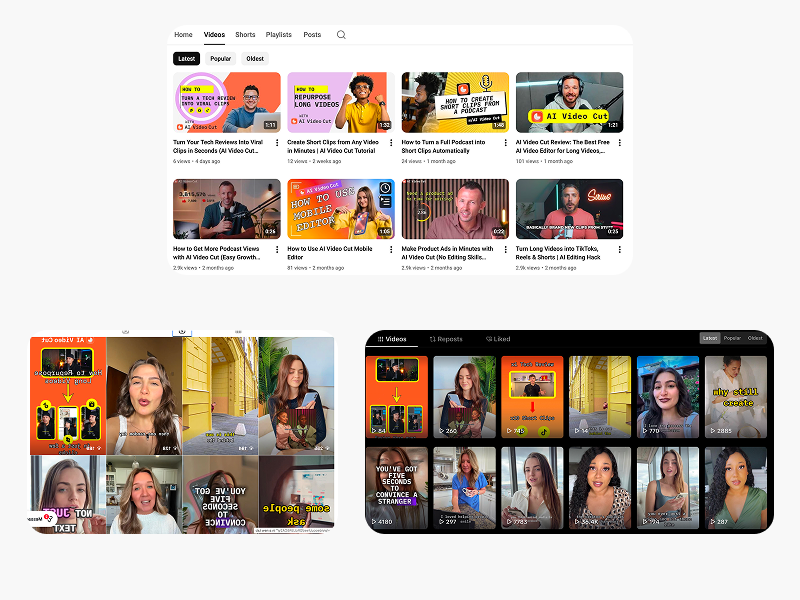
This step often reveals duplication: the same talking point framed five slightly different ways. That’s not necessarily bad, but it’s something you need to see clearly.
#3. Look beyond numbers & review the videos themselves
Quantitative data should be followed by qualitative review. Watch your videos as if you’re seeing them for the first time.
Pay attention to the opening seconds. Many underperforming videos fail before the message even starts. Look at pacing, visual transitions, subtitle placement, and sound choices. In 2026, viewers expect clarity fast. Long intros are usually ignored.
This is also where brand voice issues appear. Some clips may feel off not because they’re bad, but because they don’t sound like you.
💡Which metrics actually matter now
In 2026, watch time and completion rate remain the most reliable indicators of video health. A clip with moderate views and strong completion is often more valuable than a viral spike with poor retention.
Saves and shares are especially important for short educational or explanatory videos. They suggest the content has a life beyond a single scroll. Comments deserve closer reading than counting. A dozen thoughtful responses can outweigh hundreds of generic reactions.
Context matters, too. A low-performing video posted during a trend slump isn’t the same as one that missed the mark entirely. Part of the audit is separating timing issues from content issues.
#4. Find missed repurposing opportunities
Audits often show that teams extract too little from their strongest material. A podcast episode might produce one or two clips when it could support a short series. A high-performing video might never be tested with a new hook or alternative caption.
Evergreen content deserves special attention. Tutorials, explanations, and advice-based videos often work well with minor updates or tighter edits. With AI-assisted tools, regenerating clips with different prompts or structures is faster than starting from scratch.
#5. Decide what to fix, cut, and repeat
By this point, patterns should be visible. Some formats consistently attract saves but few comments. Others spark discussion but fade quickly. Use this information to make clear decisions.
Some videos are worth fixing — strong ideas let down by execution. Others should be retired altogether. Letting go of time-consuming formats that no longer deliver is part of maintaining a healthy content operation.
#6. Turn insights into an action plan
An audit only matters if it leads to change. Use your findings to update content priorities, adjust posting frequency, and streamline workflows.
If short explainers outperform polished montages, lean into that. If videos under 20 seconds consistently win on one platform, treat that as a rule until proven otherwise. The goal is fewer guesses and more informed decisions.
How AI Tools Reshape the Social Media Audit Process
AI doesn’t replace judgment, but it accelerates routine work. Tagging content, grouping clips by theme, and spotting performance trends across large libraries is far easier than it was a few years ago.
Tools like AI Video Cut make it simpler to test variations without rebuilding everything. A good audit often ends with a clear plan for regeneration: same source, new hook, adjusted pacing, or platform-specific tweaks.
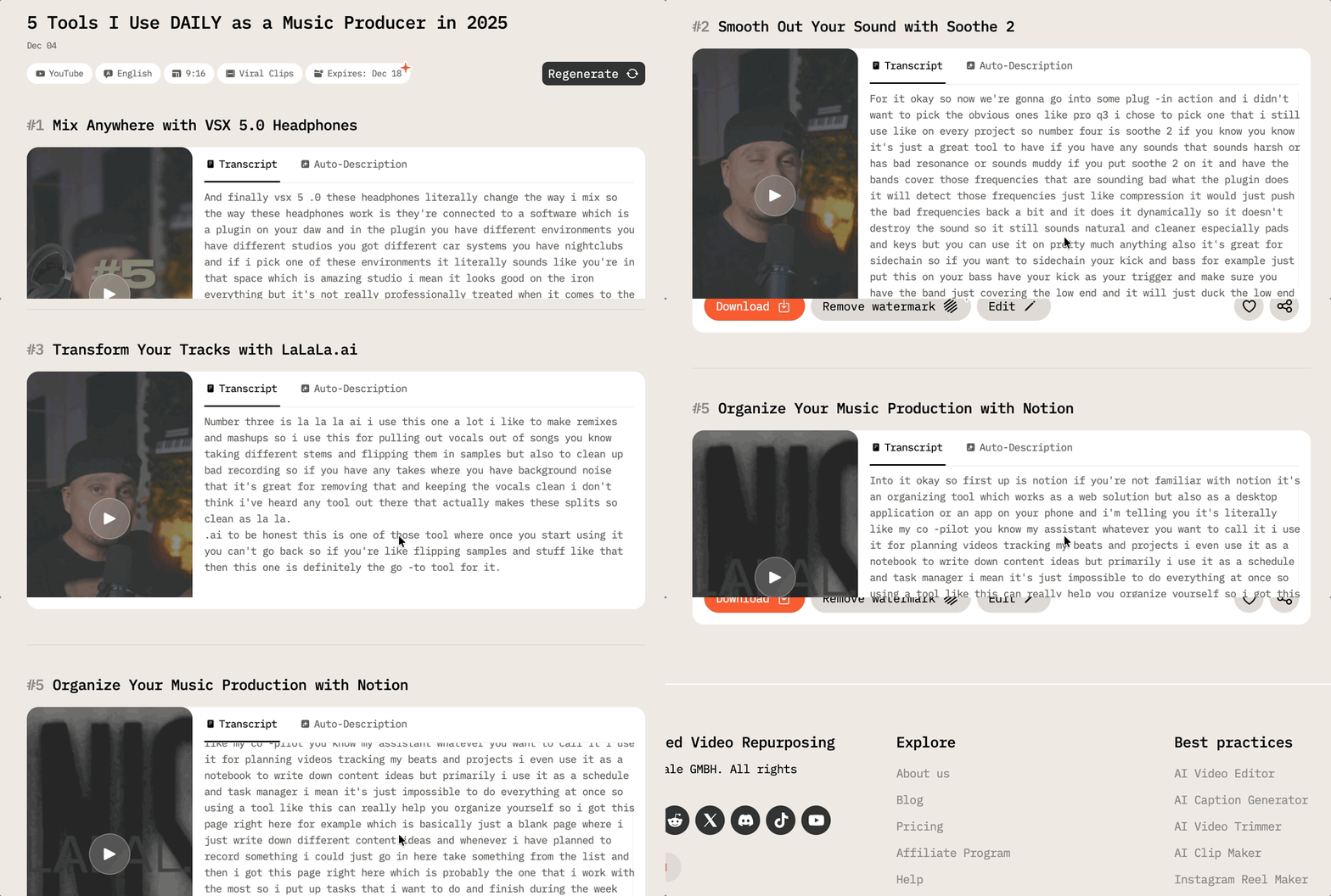
The audit becomes a bridge between analysis and production, not just a report that gets filed away.
How Often Should You Audit Video Content?
Light audits work well on a monthly basis, especially for active accounts. Deeper reviews are better done quarterly, when enough data has accumulated to show trends rather than noise.
Platform-specific audits are useful after visible algorithm changes or format updates. Waiting too long often means repeating the same mistakes for months.
Common Mistakes Worth Avoiding
Even teams that audit content regularly tend to repeat the same errors. Most of them aren’t technical. Rather, they’re behavioral. Knowing what to look out for can save time and prevent wrong conclusions.
Over-relying on views as the main indicator
Views are still the most visible metric, which makes them tempting to treat as the final verdict. In practice, they rarely tell the full story. A short clip can rack up impressions because it fits a trend or gets pushed briefly by the platform, yet fail to hold attention past the first seconds. During audits, it’s common to see highly viewed videos with weak retention quietly crowd out fewer but more useful clips that bring saves, replies, or profile visits. Judging content only by reach often leads teams to copy formats that look successful but don’t actually move anything forward.
Ignoring older content that still works
Another frequent mistake is focusing only on recent posts. Videos published months ago often continue to generate comments, saves, and slow-but-steady reach. These clips tend to reveal more about lasting audience interests than last week’s spike. When audits skip them, teams miss chances to reuse proven angles, tighten existing edits, or build short series around topics already validated by time.
Collecting data without making decisions
Some audits turn into documentation exercises. Everything is measured, categorized, and neatly presented — and nothing changes. The hardest part of an audit is not analysis, but choosing what to stop producing. If a format takes hours to make and consistently underperforms, it doesn’t need more testing; it needs to be retired. An audit that ends without at least a few clear cuts usually fails to do its job.
Mixing goals inside a single audit
Confusion often starts when growth, sales, and community signals are lumped together. A video that’s great for discovery may perform poorly when judged by conversion metrics, and that’s not a flaw. When audits don’t separate goals, good content gets misclassified as “unsuccessful.” Clear intent helps avoid killing videos that are doing exactly what they should.
Overproducing instead of improving
In AI-assisted workflows, volume is the easiest variable to increase. When numbers dip, the instinct is to post more. Audits show why this backfires. Weak hooks, rushed captions, or poor pacing don’t fix themselves through repetition. Improving structure usually has a bigger impact than doubling output.
Copying what worked without understanding why
Seeing one format perform well often triggers blind replication. The problem is that surface traits — trend audio, caption length, camera angle — are easier to copy than underlying reasons like timing, framing, or audience state of mind. Strong audits break winning videos apart to see which elements mattered and which were incidental.
Failing to document conclusions
Finally, many teams forget to write down what they learned. Without a short set of rules or observations, the same experiments get run again and again. A few concrete takeaways after each audit can guide production for weeks and make the next review faster, and more honest.
Nice to Know
What’s the difference between a video audit and regular analytics reporting?
Analytics reporting shows what happened. A video audit on social media explains why it happened and what to do next. It combines numbers with close viewing and pattern recognition.
Do small creators need video audits, or is this for big teams only?
Small creators benefit just as much, sometimes more. When time is limited, audits help focus effort on formats that pull their weight.
How much data do you need for a meaningful audit?
Even 20–30 videos can reveal useful trends if they span different formats or topics. The goal is comparison, not scale.
Can AI replace manual review during audits?
AI helps organize and surface patterns, but human review is still needed. Tone, clarity, and intent aren’t fully captured by metrics alone.
AI notice: This feature uses AI technology to process your video files.